Leh
Capital of Ladakh • Gateway to the High Himalaya
About Leh
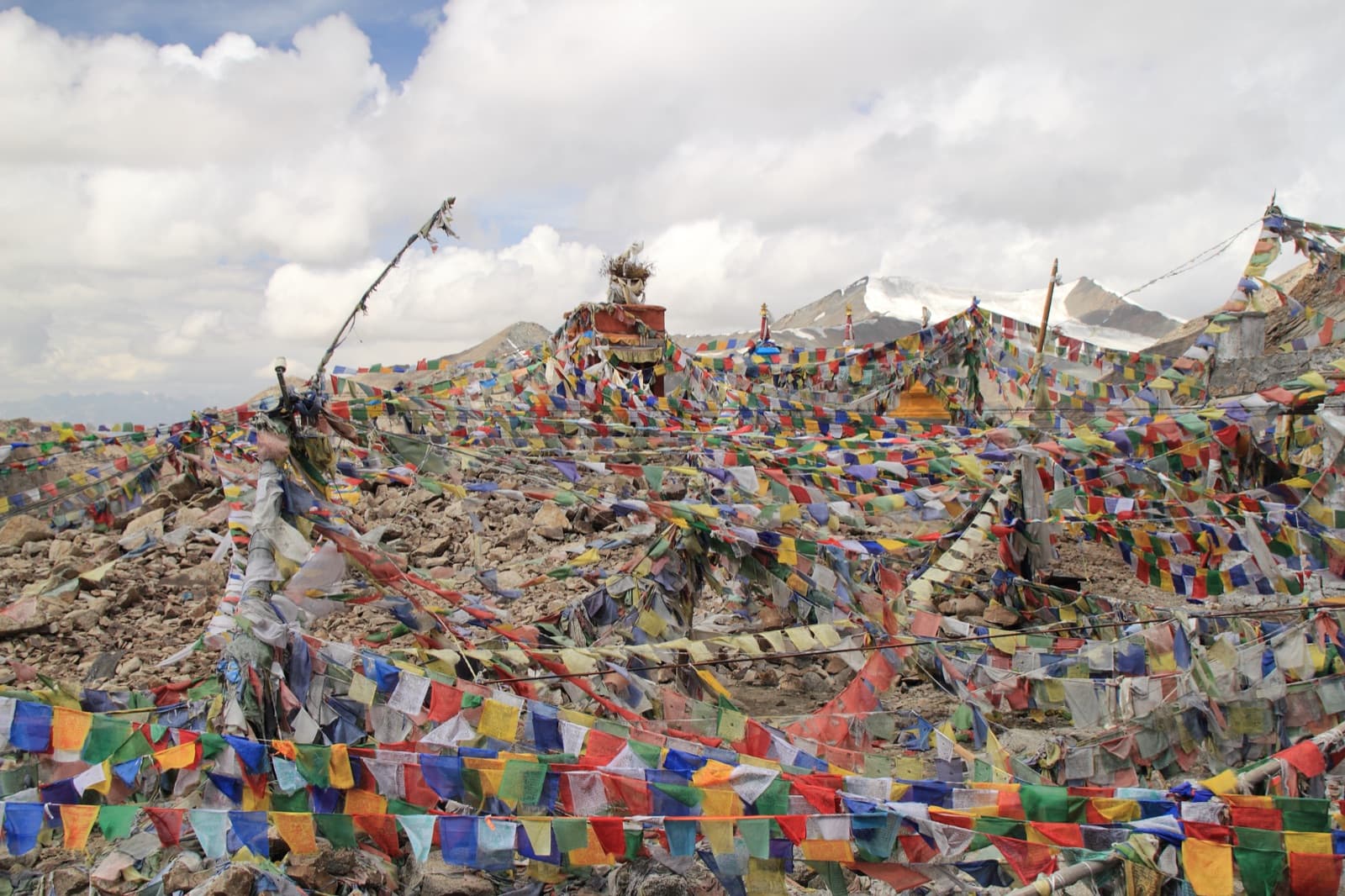
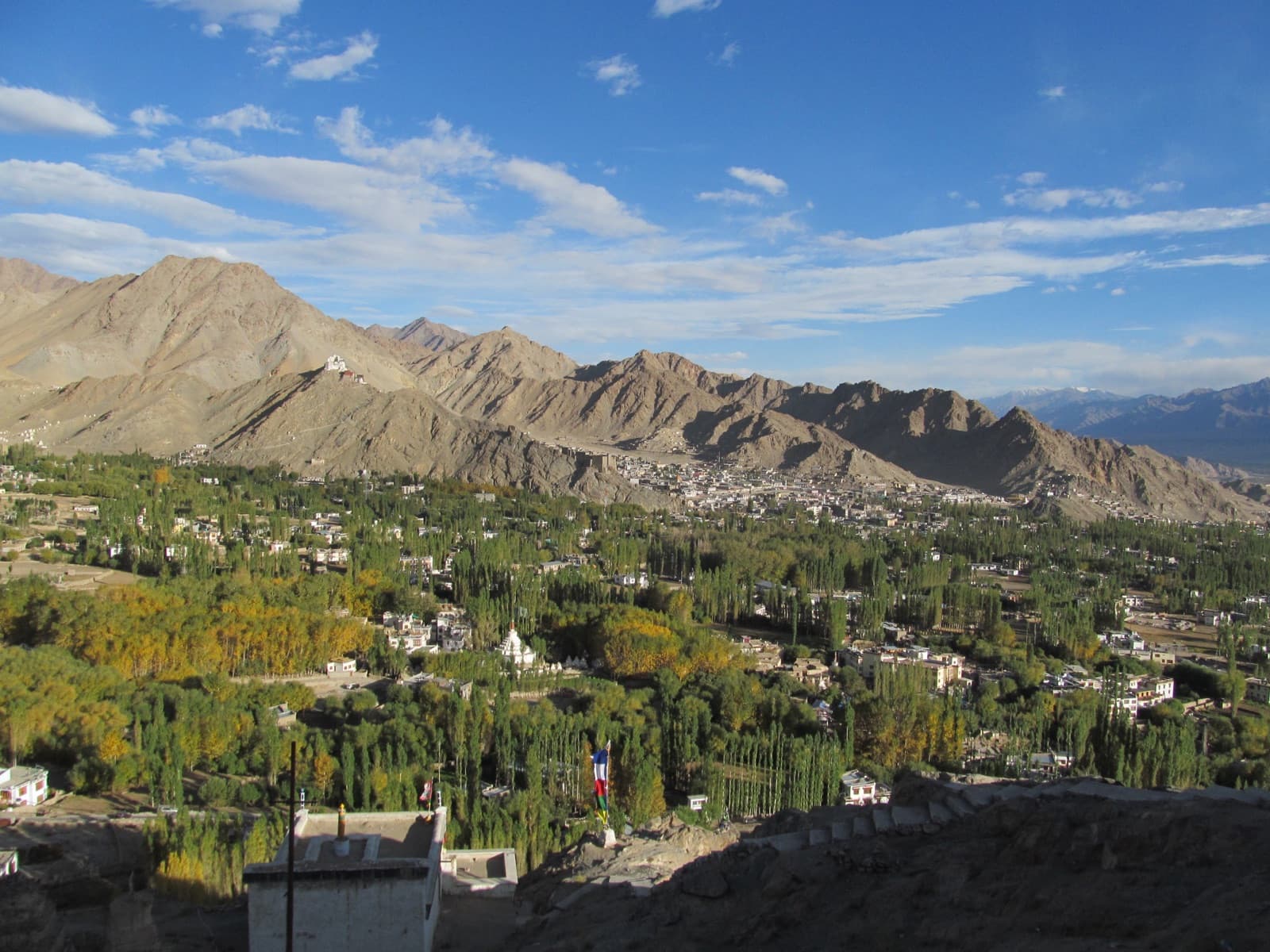
Leh, the capital of the Union Territory of Ladakh, sits in a high desert valley of the Indus at about 3,500 metres, ringed by barren ochre mountains and snow peaks. Once a key halt on the trans-Himalayan caravan routes between Punjab, Tibet, and Central Asia, the old town still climbs a hillside beneath the nine-storey Leh Palace, a smaller cousin of Lhasa's Potala. Whitewashed stupas, fluttering prayer flags, mud-brick houses, and a lively bazaar give the town a character unlike anywhere else in India.
For most travellers Leh is both a destination and a base camp: after a day or two of acclimatisation and sightseeing, roads fan out to Khardung La and the Nubra Valley, the blue expanse of Pangong Tso, and the great Indus Valley monasteries of Shey, Thiksey, and Hemis. Planning a road trip? See our full Chandigarh–Leh Ladakh circuit itinerary for a day-by-day route over the Manali and Srinagar highways.
Top Attractions
Leh Palace
A nine-storey 17th-century royal palace of the Namgyal dynasty towering over the old town, with museum galleries and sweeping rooftop views of the Leh valley and Stok Kangri.
Shanti Stupa
A gleaming white peace pagoda built by Japanese Buddhists on a hilltop at Changspa — the best sunset and sunrise viewpoint over Leh town.
Namgyal Tsemo Gompa
A 15th-century monastery perched on Tsemo hill above Leh Palace, with a three-storey gilded Maitreya Buddha and panoramic views of the town.
Hall of Fame
A moving Indian Army museum near the airport commemorating the soldiers of the Kargil and Siachen conflicts, with weapons, memorabilia, and a sound-and-light show.
Leh Market & Old Town
A pedestrianised bazaar of pashmina, apricots, Tibetan handicrafts, and cafes, with the mud-brick lanes and stupas of the old town climbing the hill behind.
Shey, Thiksey & Hemis
The great Indus Valley trio within an hour of Leh — Shey Palace's giant copper-gilt Buddha, the Potala-like Thiksey Monastery, and Hemis, the largest and richest gompa in Ladakh.
Best Time to Visit
May to September is the prime season, with warm sunny days, open highways, and every excursion route accessible. June brings the Hemis Festival, while July–August is the busiest period — book flights and hotels early. Ladakh lies in a rain shadow, so it stays largely dry even during the monsoon, though occasional cloudbursts can affect the Manali and Srinagar roads.
From October the passes begin closing and temperatures plunge; winter (November–April) drops well below freezing, with only flights connecting Leh to the outside world. It is a magical, silent season for those chasing the Chadar Trek or snow leopards in Hemis National Park, but most hotels and restaurants shut down.
Visiting Tips
- Acclimatise first: rest completely for 24–48 hours after arriving — Leh is at ~3,500 m and AMS affects even fit travellers. Hydrate well, skip alcohol, and keep the first day's plan empty.
- Sequence your trip: do Leh's local sights first, then Khardung La/Nubra, and save the highest sleeping altitudes (Pangong, Tso Moriri) for last.
- Sun protection is serious: the thin air means intense UV — carry SPF 50 sunscreen, sunglasses, a cap, and lip balm.
- Get permits in advance: apply for the Inner Line Permit online at lahdclehpermit.in before day trips to Nubra, Pangong, or Tso Moriri, and carry several photocopies.
- Carry cash and a postpaid SIM: prepaid SIMs do not work in Ladakh, and ATMs are scarce beyond Leh town.
- Pack in layers: even in summer, mornings and evenings are cold, and pass crossings can be near freezing.
Nearby Places
Khardung La
One of the world's highest motorable passes at ~5,359 m, the dramatic gateway from Leh into the Nubra Valley.
Nubra Valley
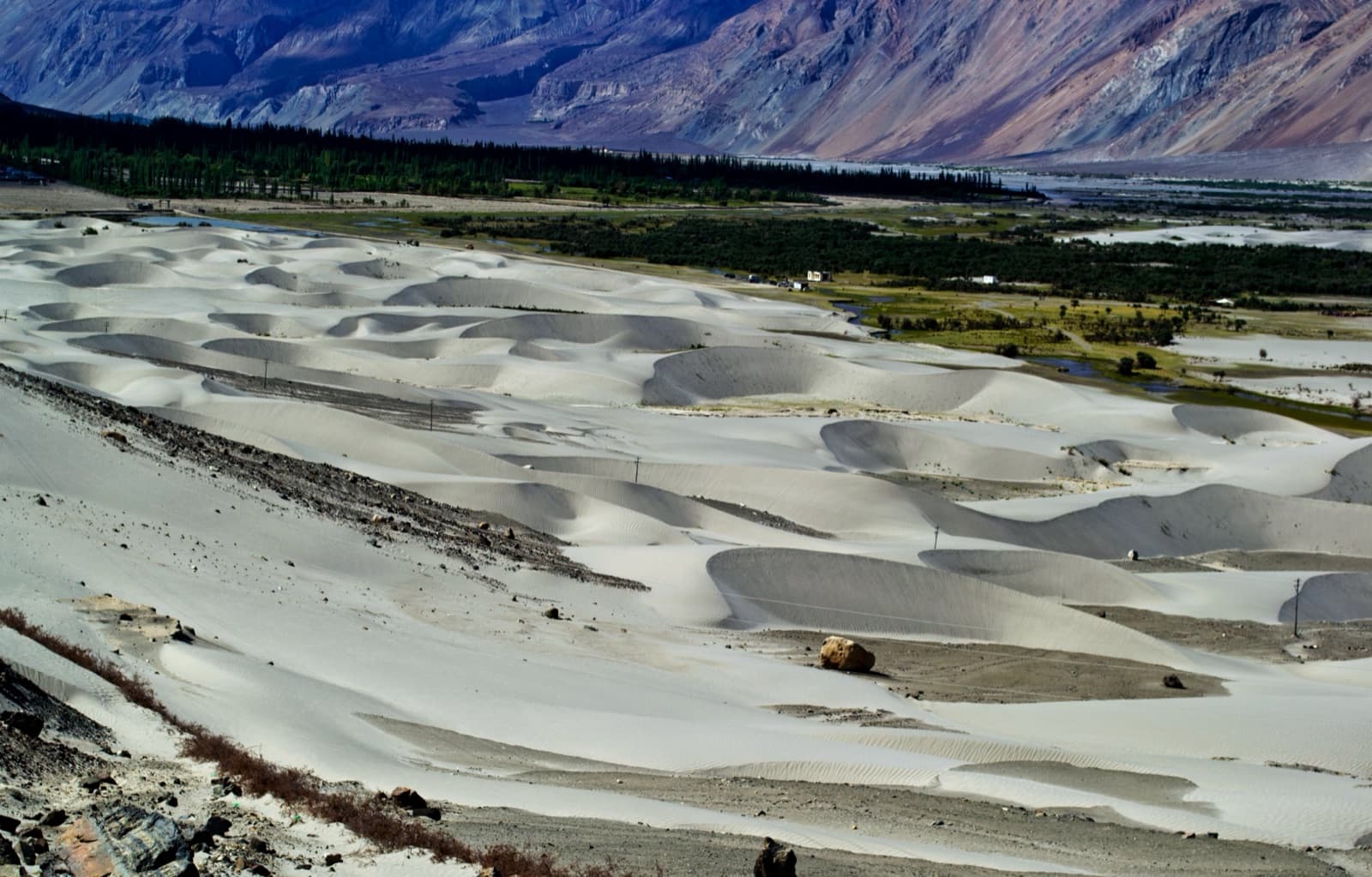
A high-altitude desert of sand dunes, double-humped Bactrian camels, and the Diskit Monastery, across Khardung La.
Pangong Tso
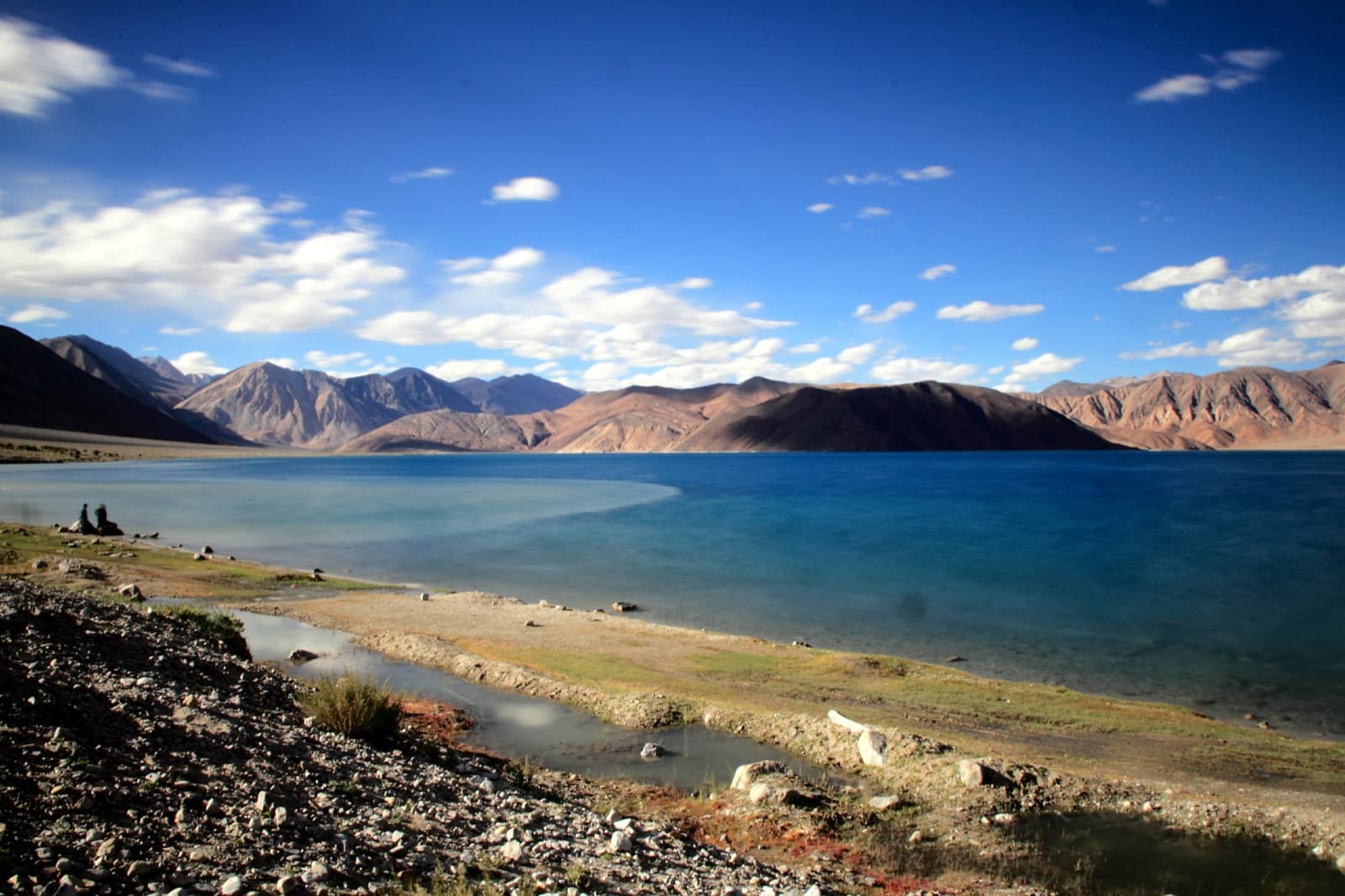
The famous colour-changing brackish lake at ~4,225 m stretching from Ladakh into Tibet, reached via Chang La.
Zoji La Pass
The dramatic high pass on the Srinagar–Leh highway linking Ladakh with the Kashmir Valley via Kargil and Drass.
Sonmarg
The “Meadow of Gold” on the Kashmir side of Zoji La — a classic overnight halt on the Srinagar–Leh road journey.
Frequently Asked Questions
The best time to visit Leh is from May to September, when the weather is pleasant (roughly 10–25°C by day), both the Manali–Leh and Srinagar–Leh highways are open, and all sightseeing routes including Khardung La, Nubra Valley, and Pangong Tso are accessible. July and August are peak season. Winter (October–April) is extremely cold, with many hotels closed, though flights to Leh operate year-round and winter draws Chadar Trek and snow-leopard enthusiasts.
Yes — Leh sits at about 3,500 metres (11,500 ft), and acute mountain sickness (AMS) is common, especially if you fly in directly. Plan at least 24–48 hours of complete rest on arrival: no strenuous activity, no long drives, drink plenty of water, avoid alcohol, and sleep well. Headache, nausea, and breathlessness usually settle within a day or two. Consult your doctor about preventive medication such as acetazolamide (Diamox), and descend or seek medical help if symptoms worsen.
By air: Leh’s Kushok Bakula Rimpochee Airport (IXL/KBR) has direct flights from Delhi (about 1.5 hours) and seasonal connections from Mumbai, Chandigarh, and Srinagar. By road: the Manali–Leh highway (~475 km, open roughly June–October) and the Srinagar–Leh highway via Zoji La and Kargil (~420 km, open roughly May–November) are two of India’s most spectacular road journeys. There is no railway to Leh — the nearest major railheads are Jammu and Chandigarh.
Leh town itself needs no permit for Indian tourists. However, day trips beyond Leh — Khardung La and Nubra Valley, Pangong Tso, Tso Moriri, Hanle, and the Dah-Hanu villages — require an Inner Line Permit for Indian nationals, and foreign nationals need a Protected Area Permit (PAP). Both are issued online via the official portal lahdclehpermit.in or from the DC office in Leh, usually within a day. Carry multiple photocopies, as checkposts collect a copy each.
Only postpaid SIM cards work in Ladakh — prepaid connections from outside the region do not get a signal. Jio, Airtel, and BSNL postpaid have good coverage in Leh town, but connectivity drops quickly on remote routes like Pangong and Nubra. Many hotels and cafes in Leh offer Wi-Fi, though speeds fluctuate. Download offline maps and carry some cash, as card machines and ATMs can be unreliable outside town.
Plan a minimum of 5–6 days: two for acclimatisation and Leh sightseeing (Leh Palace, Shanti Stupa, monasteries), one for Khardung La and Nubra Valley, one for Pangong Tso, and a buffer day. A comfortable, unhurried trip covering Nubra, Pangong, and the Indus Valley monasteries takes 7–9 days. If you are arriving by road from Manali or Srinagar, add 2 days each way for the drive.
In town: the nine-storey Leh Palace, Shanti Stupa at sunset, Namgyal Tsemo Gompa, the Hall of Fame war museum, and the old town and Leh Market. Along the Indus Valley within an hour’s drive: Shey Palace, Thiksey Monastery (often compared to the Potala), and Hemis Monastery, Ladakh’s largest. Further out lie Khardung La, Nubra Valley, Pangong Tso, and the Magnetic Hill–Sangam stretch on the Srinagar highway.
Leh has options for every budget — guesthouses and homestays from about Rs 800–1,500 a night, mid-range hotels around Rs 2,500–5,000, and a handful of luxury properties. Food is inexpensive, with Tibetan kitchens and cafes across the town. SBI, PNB, J&K Bank, and HDFC ATMs operate in Leh Market, but they can run dry in peak season and there are almost none beyond town, so withdraw enough cash before heading to Nubra or Pangong.
Location & Map
Quick Facts
How to Reach
Direct flights to Kushok Bakula Rimpochee Airport (IXL) from Delhi year-round; seasonal from Mumbai, Chandigarh & Srinagar.
Manali–Leh highway (~475 km, Jun–Oct) or Srinagar–Leh highway via Zoji La & Kargil (~420 km, May–Nov).
HRTC/HPTDC buses and shared taxis run from Manali and Srinagar in season; local taxis operate on fixed union rates in Leh.
Nearest major railheads are Jammu Tawi and Chandigarh, both 2-day road journeys away.
Weather Guide
Ladakh is a cold desert in a rain shadow — expect intense sun by day and sharp cold after sunset, in every season.
Browse every guide we have for this state: Places to visit in Ladakh