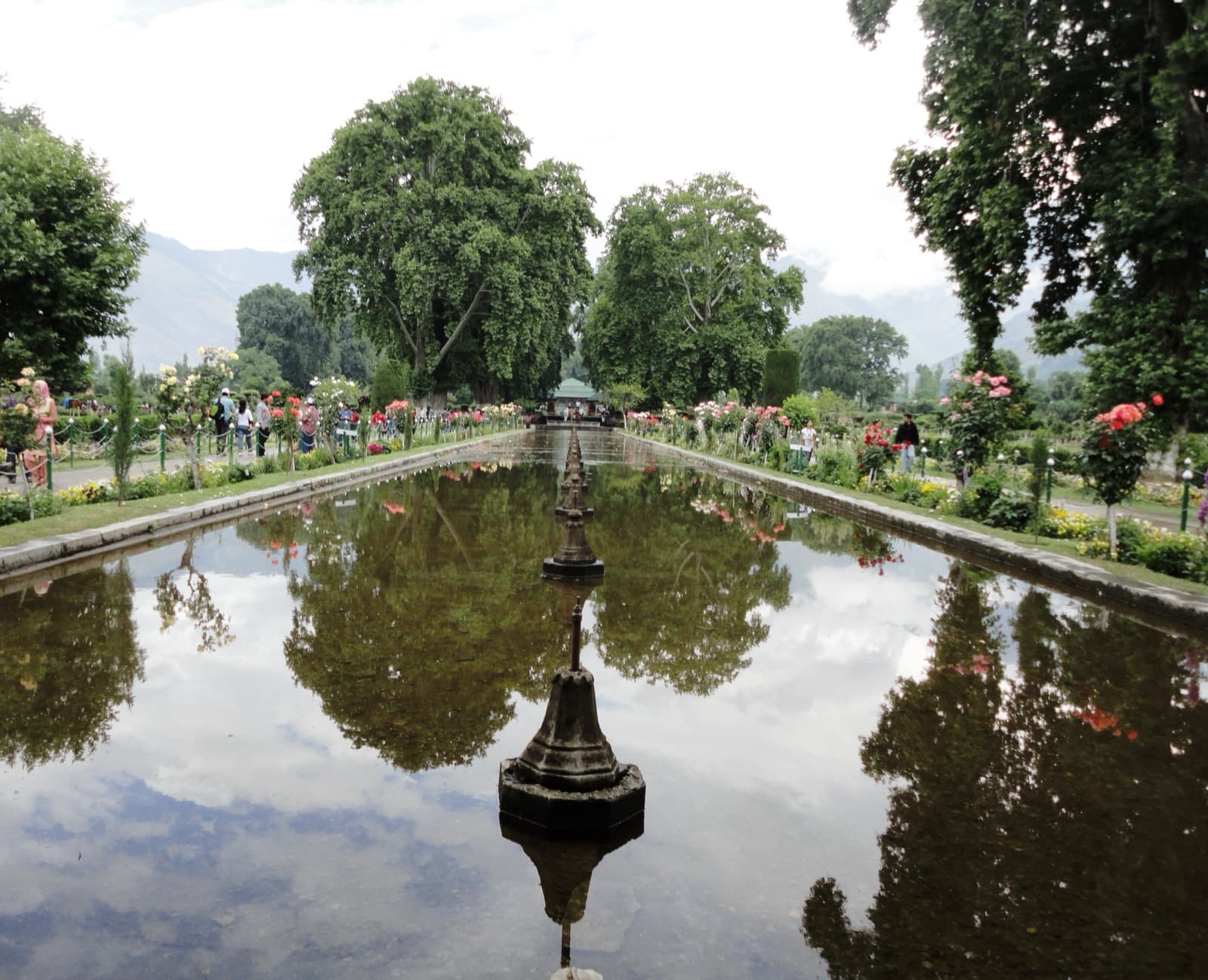
Shalimar Bagh
The Abode of Love • Mughal Garden Paradise
About Shalimar Bagh
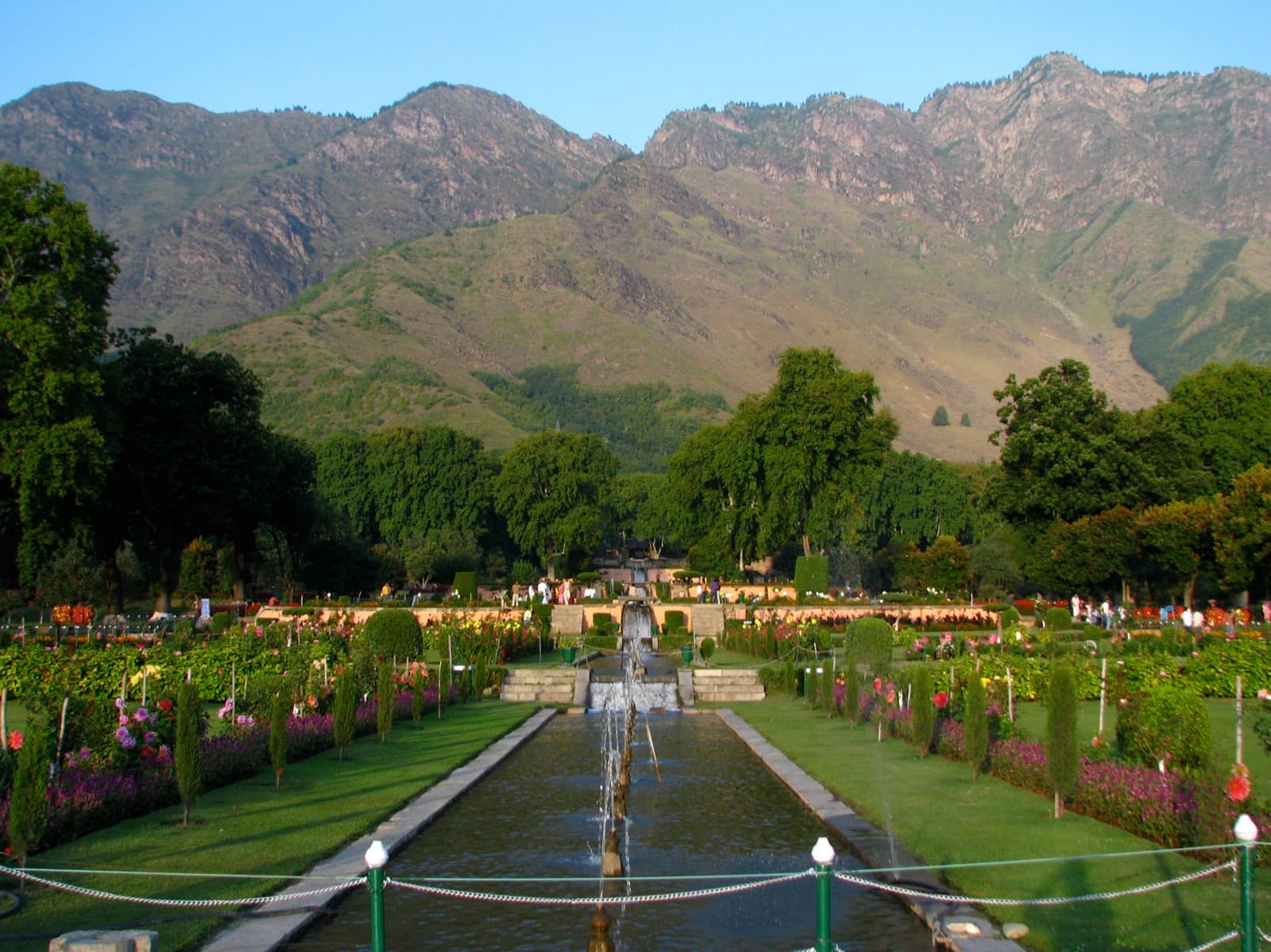
Shalimar Bagh, meaning "Abode of Love," is a Mughal garden located in Srinagar, Jammu and Kashmir. Built by Emperor Jahangir in 1619 for his wife Nur Jahan, it is one of the most beautiful Mughal gardens in India and a UNESCO World Heritage Site.
The garden is famous for its terraced layout, flowing fountains, and beautiful chinar trees. It was originally called Farah Baksh (the delightful) and later renamed Shalimar Bagh. The garden is designed in the traditional Persian Charbagh style with four levels connected by water channels.
The garden covers an area of 12.4 hectares and features over 400 fountains, beautiful flowerbeds, and ancient chinar trees. It is particularly stunning during spring when flowers are in full bloom and during autumn when the chinar leaves turn golden.
Historical Background
1619 - Construction
Emperor Jahangir built the garden for his beloved wife Nur Jahan, originally naming it Farah Baksh.
1630 - Expansion
Emperor Shah Jahan expanded the garden and renamed it Shalimar Bagh, adding more terraces and fountains.
Mughal Era
Served as a royal retreat and summer residence for Mughal emperors visiting Kashmir.
British Period
The garden was maintained and preserved by the British administration.
Present Day
Designated as a UNESCO World Heritage Site and maintained as a major tourist attraction.
Garden Features & Architecture
Garden Layout
- • Four terraced levels (Diwan-e-Aam, Diwan-e-Khas, Zenana, and Harwan)
- • Traditional Persian Charbagh design
- • Central water channel with 410 fountains
- • Beautiful flowerbeds and lawns
- • Ancient chinar trees
Key Structures
- • Black marble pavilion (Diwan-e-Khas)
- • Public audience hall (Diwan-e-Aam)
- • Zenana garden (women's quarters)
- • Harwan reservoir and canal
- • Beautiful stone pathways
Best Time to Visit
Spring (Apr-May)
Flowers in full bloom, pleasant weather, and vibrant colors throughout the garden.
Summer (Jun-Aug)
Lush greenery, flowing fountains, and cool shade from chinar trees.
Autumn (Sep-Oct)
Golden chinar leaves, romantic atmosphere, and fewer crowds.
Activities & Experiences
Garden Exploration
- • Stroll through terraced gardens
- • Admire the fountains and water channels
- • Relax under ancient chinar trees
- • Enjoy the flowerbeds and lawns
- • Visit the black marble pavilion
Cultural Experiences
- • Learn about Mughal architecture
- • Photography of garden landscapes
- • Enjoy traditional Kashmiri music
- • Picnic in designated areas
- • Evening light and sound shows
Essential Visiting Tips
What to Bring
- • Comfortable walking shoes
- • Camera for photography
- • Water bottle
- • Sunscreen and hat
- • Light snacks (if allowed)
Important Notes
- • Best visited early morning or evening
- • Avoid weekends for fewer crowds
- • Respect the garden environment
- • Check for special events
- • Carry cash for entry fees
Photography Guide
Best Photo Spots
- • Fountain views: Capture the flowing water channels
- • Chinar trees: Especially beautiful in autumn
- • Black marble pavilion: Architectural details
- • Terraced gardens: Symmetrical compositions
- • Flowerbeds: Close-up macro photography
Camera Settings
- • Aperture: f/5.6 to f/8 for garden scenes
- • ISO: 100-400 for natural light
- • Shutter Speed: 1/60s for fountains
- • Lens: Wide-angle and macro lenses
Nearby Attractions
Dal Lake
The famous floating paradise with houseboats and shikaras.
Hazratbal Shrine
Important Muslim shrine on the shores of Dal Lake.
Frequently Asked Questions
Shalimar Bagh was built in 1619 CE by the Mughal Emperor Jahangir for his beloved wife Nur Jahan. The garden's original name was "Farah Bakhsh" (Giver of Joy) and "Faiz Bakhsh" (Giver of Bounty) — it was later renamed Shalimar, meaning "abode of love" in Sanskrit. Jahangir used it as a summer pleasure garden, taking advantage of Kashmir's cool climate and the garden's extraordinary water supply from the Zabarwan hills. His son Shah Jahan later expanded the garden and added a private section for the royal zenana (women's quarters).
Shalimar Bagh is laid out on three ascending terraces, each serving a different function. The lowest terrace (public court) was accessible to ordinary visitors and contains the main canal and several pavilion fountains. The middle terrace (the Emperor's court) was reserved for courtly functions and is the most ornate section, featuring the black marble throne platform from which Jahangir held court. The uppermost terrace (the zenana or women's court) was a private garden for royal ladies, enclosed by high walls. Water flows through all three terraces via a central canal fed by a natural spring in the hills above.
The fountains in Shalimar Bagh are not continuously operated but are typically switched on during weekends and public holidays, as well as during the spring and autumn tourist seasons. The J&K Tourism Department occasionally runs special evening fountain shows. It is advisable to call the garden management office or check with your hotel before visiting specifically to see the fountains in action. The garden's water channel itself — the central rill running through all three terraces — flows continuously as it is fed by a natural spring.
Spring (April–May) is the most spectacular time to visit Shalimar Bagh, when the famous Kashmiri chinar (Oriental plane) trees are in full leaf and thousands of tulips, irises, and daffodils bloom along the garden terraces. The Tulip Garden at nearby Siraj Bagh (opened by the J&K government) has the largest tulip display in Asia, which coincides beautifully with the spring blooms at Shalimar. Autumn (October–November) brings a second burst of colour when the massive chinar trees turn vivid shades of orange, red, and gold — arguably even more dramatic than spring.
Yes, and it is the standard approach for most visitors. Shalimar Bagh is 3 km from Nishat Bagh along the shores of Dal Lake, connected by the scenic Boulevard Road. Both gardens open at 9:00 AM. If you start at Shalimar Bagh (the more famous of the two) in the morning and walk or taxi to Nishat Bagh after lunch, you can comfortably see both in a half-day. Add a visit to the Chashma Shahi spring garden (also Mughal-era, smaller and higher up the hillside) for a complete Mughal garden itinerary.
Shalimar Bagh is 14–15 km from the Tourist Reception Centre in Srinagar, approximately 30–45 minutes by road depending on traffic. Auto-rickshaws and shared taxis are available from the main city centre. A more memorable option is to take a Shikara from one of the Dal Lake ghats to the Shalimar Bagh ghat — the approach to the garden by water, with the terraces rising above you, is extraordinarily beautiful. The Shikara journey from the main Boulevard ghat takes 30–45 minutes.
Yes. The entry fee is ₹20 for Indian nationals and ₹250 for foreign tourists (subject to periodic revision by ASI — confirm at the gate). Children under 15 years are admitted free. Camera entry is included in the general ticket. The garden is maintained by the Archaeological Survey of India. There is a small café inside the garden near the lower terrace, and the surrounding area has numerous Kashmiri food stalls selling kahwa (saffron tea), local bread (kulcha), and light snacks.
Early morning (9:00–10:30 AM) and late afternoon (4:00–6:00 PM) are the most pleasant times. The garden opens at 9:00 AM, and arriving at opening time means you have the chinar alleys largely to yourself before tour groups arrive. Late afternoon light on the chinar leaves — particularly in autumn — is exceptional for photography. Midday in summer can be warm even in Srinagar, and the garden offers limited shade outside the chinar avenues. The garden closes at sunset (approximately 6:00 PM in summer, 5:00 PM in winter).
Location & Map
Shalimar Bagh is located on the right bank of Dal Lake in Srinagar, Jammu and Kashmir.
Address:
Shalimar Bagh, Srinagar, Jammu and Kashmir 191121, India
Coordinates:
34.1489° N, 74.8667° E
Quick Facts
Entry Fees
Opening Hours
How to Reach
Srinagar Airport (SXR) - 20 km from Shalimar Bagh
Jammu Tawi Station - 300 km from Srinagar
Well connected by bus from major cities
Taxis, auto-rickshaws, and local buses from Dal Lake
Contact Information
Weather Guide
Browse every guide we have for this state: Places to visit in Jammu & Kashmir