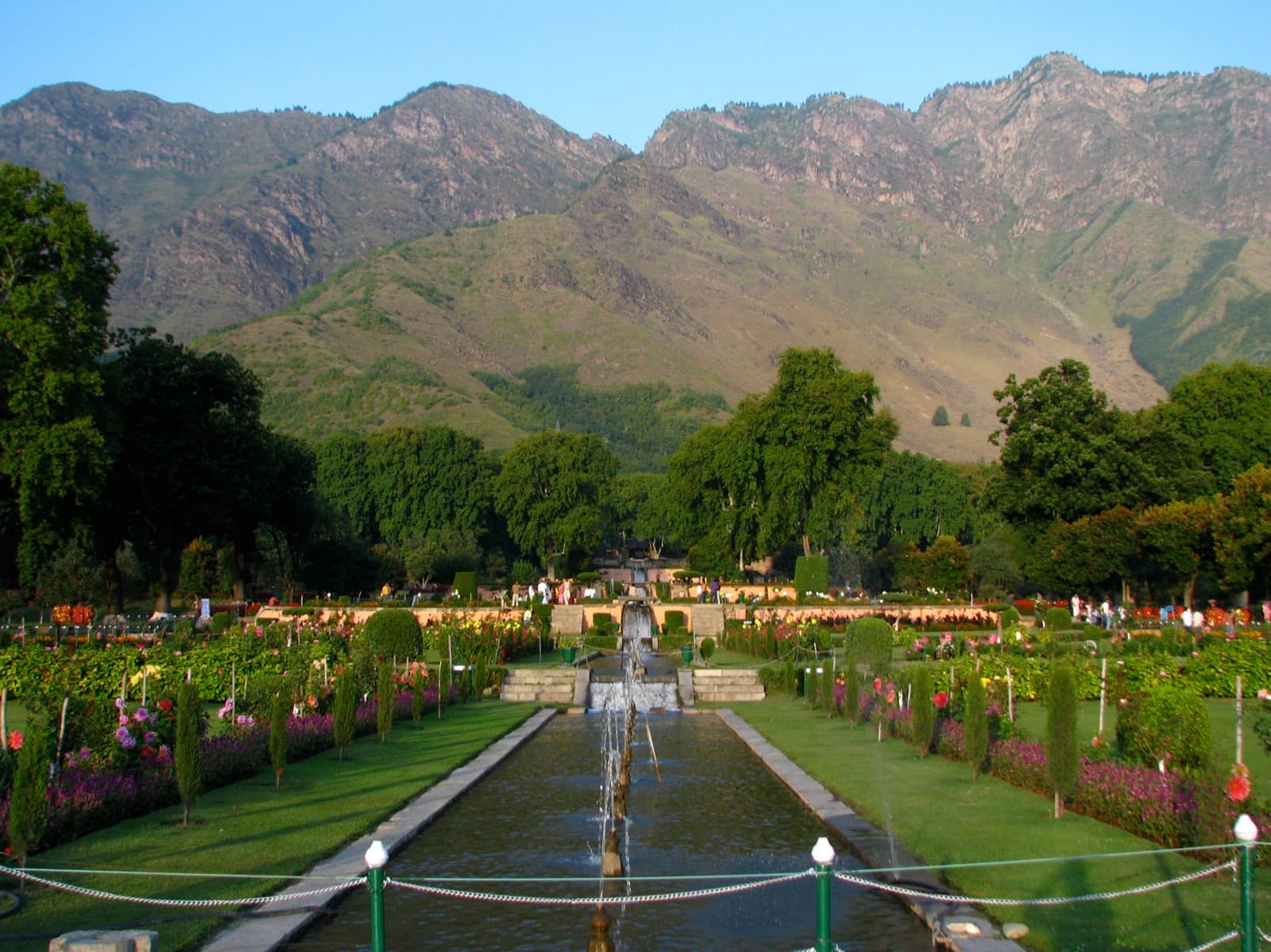
Nishat Bagh
The Garden of Joy • Twelve Terraces of Beauty
About Nishat Bagh
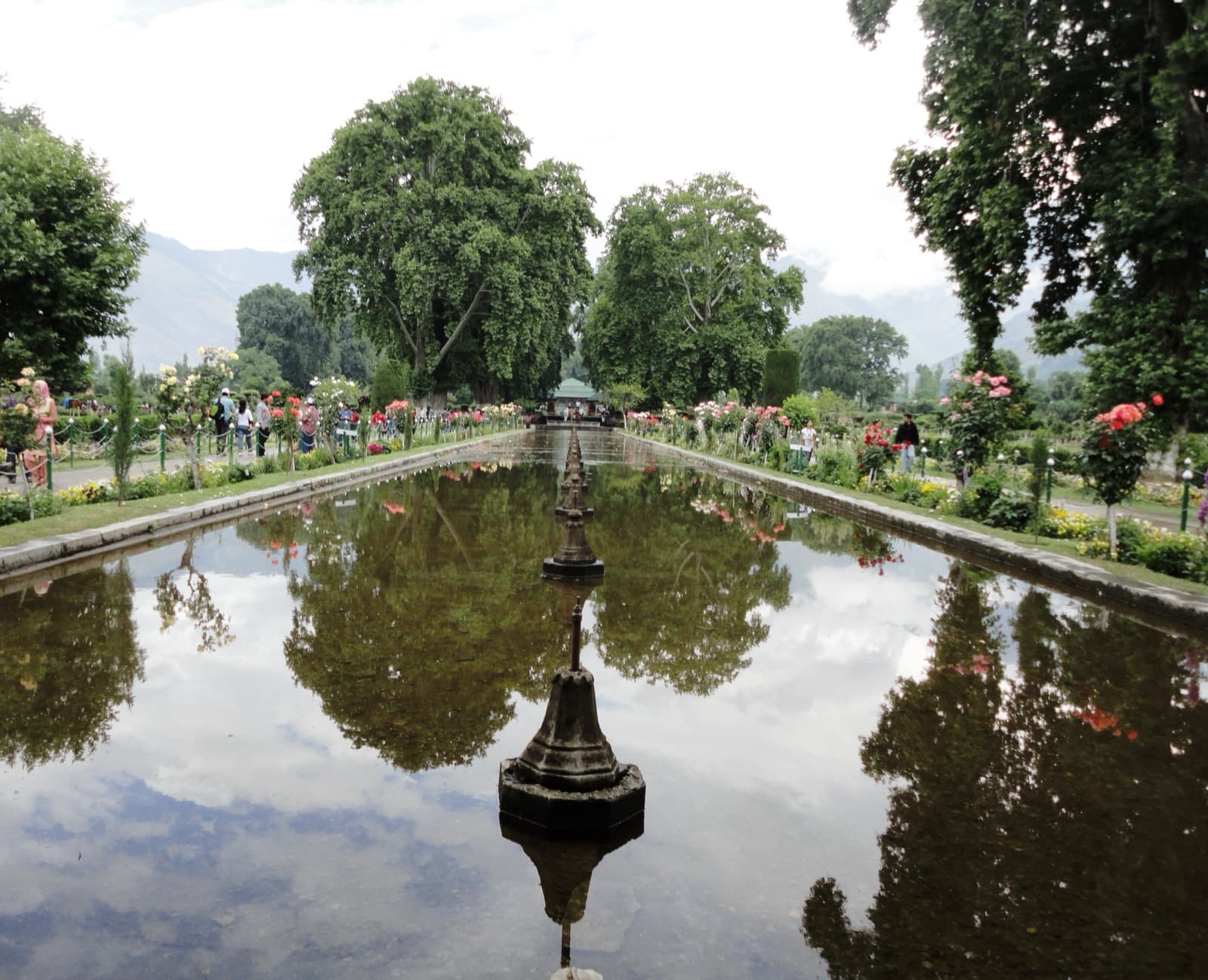
Nishat Bagh, meaning "Garden of Joy," is a Mughal garden located on the eastern side of Dal Lake in Srinagar, Jammu and Kashmir. Built in 1633 by Asaf Khan, the brother of Empress Nur Jahan, it is the second largest Mughal garden in Kashmir and a UNESCO World Heritage Site.
The garden is famous for its 12 terraces, each representing one of the 12 zodiac signs. It offers breathtaking views of Dal Lake and the surrounding mountains. The garden was designed in the traditional Persian Charbagh style with a central water channel flowing through all terraces.
Nishat Bagh covers an area of 46 acres and features beautiful flowerbeds, fountains, chinar trees, and stunning views of the Zabarwan mountain range. The garden is particularly beautiful during spring when flowers bloom and during autumn when the chinar leaves turn golden.
Historical Background
1633 - Construction
Built by Asaf Khan, the brother of Empress Nur Jahan and father-in-law of Shah Jahan.
Mughal Era
Served as a royal garden and retreat for Mughal nobility visiting Kashmir.
18th Century
The garden was expanded and maintained by subsequent rulers.
British Period
Preserved and maintained by the British administration as a heritage site.
Present Day
Designated as a UNESCO World Heritage Site and maintained as a major tourist attraction.
Garden Features & Architecture
Garden Layout
- • 12 terraces representing zodiac signs
- • Traditional Persian Charbagh design
- • Central water channel with fountains
- • Beautiful flowerbeds and lawns
- • Ancient chinar and cypress trees
Key Features
- • Panoramic views of Dal Lake
- • Zabarwan mountain backdrop
- • Water channels and fountains
- • Stone pathways and pavilions
- • Traditional Kashmiri architecture
Best Time to Visit
Spring (Apr-May)
Flowers in full bloom, pleasant weather, and vibrant colors throughout the garden.
Summer (Jun-Aug)
Lush greenery, flowing fountains, and cool shade from trees.
Autumn (Sep-Oct)
Golden chinar leaves, romantic atmosphere, and stunning mountain views.
Activities & Experiences
Garden Exploration
- • Walk through 12 terraced levels
- • Admire the fountains and water channels
- • Enjoy panoramic views of Dal Lake
- • Relax under ancient chinar trees
- • Photography of garden landscapes
Cultural Experiences
- • Learn about Mughal architecture
- • Enjoy traditional Kashmiri music
- • Picnic in designated areas
- • Watch sunset over Dal Lake
- • Evening strolls in the garden
Essential Visiting Tips
What to Bring
- • Comfortable walking shoes
- • Camera for photography
- • Water bottle
- • Sunscreen and hat
- • Light snacks (if allowed)
Important Notes
- • Best visited early morning or evening
- • Avoid weekends for fewer crowds
- • Respect the garden environment
- • Check for special events
- • Carry cash for entry fees
Photography Guide
Best Photo Spots
- • Top terrace: Panoramic views of Dal Lake
- • Water channels: Flowing fountains and reflections
- • Chinar trees: Especially beautiful in autumn
- • Terraced gardens: Symmetrical compositions
- • Mountain backdrop: Zabarwan range views
Camera Settings
- • Aperture: f/5.6 to f/8 for garden scenes
- • ISO: 100-400 for natural light
- • Shutter Speed: 1/60s for fountains
- • Lens: Wide-angle and telephoto lenses
Nearby Attractions
Frequently Asked Questions
Nishat Bagh was built in 1633 CE by Asif Khan, the brother of Nur Jahan and father-in-law of Emperor Shah Jahan. The name "Nishat" means "Garden of Bliss" or "Garden of Joy" in Persian. It is the largest Mughal garden in the Kashmir Valley, laid out across twelve terraces representing the twelve signs of the zodiac. The garden was constructed with water ingeniously channelled from the Zabarwan hills above — a feat of Mughal hydraulic engineering that powers dozens of fountains and channels without any mechanical pump.
Nishat Bagh rises up the gentle slope of the Zabarwan hillside in twelve distinct terraces, each at a higher elevation than the last. A central water channel runs through the entire length, dropping down stepped chutes (called chadar — "sheets" of water) between each terrace level. The upper terraces offer progressively more dramatic views over the lower garden, Dal Lake, and the Pir Panjal mountain range to the west. The twelve terraces are said to represent the twelve signs of the zodiac, though this interpretation is largely symbolic. The chinar trees that line the terraces are hundreds of years old.
While both are historic Mughal gardens of similar period, Nishat Bagh is larger (12 terraces versus Shalimar's 3) and offers more dramatic elevation change, meaning the views from the upper terraces are especially sweeping. Nishat Bagh also tends to be less crowded than Shalimar Bagh on weekday mornings, offering a quieter experience. Shalimar Bagh is more historically significant (built by Emperor Jahangir himself) and has the famous black marble throne pavilion. Both gardens are equally beautiful for spring flowers and autumn chinar foliage.
Spring (April–May) and autumn (October–mid-November) are equally magnificent. In spring, the lower terraces are filled with tulips, irises, daffodils, and daisies, while the chinar trees are in fresh leaf. In autumn, the giant chinar trees turn spectacular shades of gold, orange, and red — making the garden look like it is on fire with colour. Weekday mornings are quietest. The garden opens at 9:00 AM and closes at sunset. Entry fees are ₹20 for Indians and ₹250 for foreigners.
Yes, one of Nishat Bagh's great pleasures is the view from the lower terraces looking westward across Dal Lake towards the Pir Panjal range. On clear days, the snow-capped peaks create a dramatic backdrop. The garden is positioned directly on the eastern shore of Dal Lake, and the lower gate opens onto the lakefront road. Some visitors arrive at Nishat Bagh by Shikara from the Boulevard ghats — the approach by water through the lake's lotus beds with the terraced garden rising above is one of Kashmir's finest sights.
There are small food stalls selling kahwa (Kashmiri saffron tea), kulcha (local bread), and bottled water near the main entrance gate. Inside the garden, no food vendors are permitted, which helps maintain the peaceful atmosphere. For a proper meal, the main cluster of Srinagar restaurants and dhabas is along the Boulevard Road, about 5–10 minutes by taxi from Nishat Bagh. The Lalit Hotel, very close to the garden, has a good restaurant open to non-guests for lunch.
Unlike Srinagar's Chashma Shahi garden, Nishat Bagh does not currently offer a regular sound and light show. However, the J&K Tourism Department occasionally organises cultural evenings and music performances in the garden during the summer tourist season. Check with the Srinagar Tourist Reception Centre for the current season's programme. The garden is illuminated on special occasions but typically closes at sunset for regular visitors.
A leisurely walk from the lowest terrace to the topmost terrace and back takes approximately 45–75 minutes. The climb up the twelve terraces is gradual and suitable for most fitness levels, though comfortable walking shoes are recommended. Photography at the garden can easily extend a visit to 2 hours. The combination of Nishat Bagh with Shalimar Bagh (3 km away) and a lakeside Shikara ride makes for an excellent full morning or afternoon itinerary.
Location & Map
Nishat Bagh is located on the eastern side of Dal Lake in Srinagar, Jammu and Kashmir.
Address:
Nishat Bagh, Srinagar, Jammu and Kashmir 191121, India
Quick Facts
Entry Fees
Opening Hours
How to Reach
Srinagar Airport (SXR) - 18 km from Nishat Bagh
Jammu Tawi Station - 300 km from Srinagar
Well connected by bus from major cities
Taxis, auto-rickshaws, and local buses from Dal Lake
Contact Information
Weather Guide
Browse every guide we have for this state: Places to visit in Jammu & Kashmir