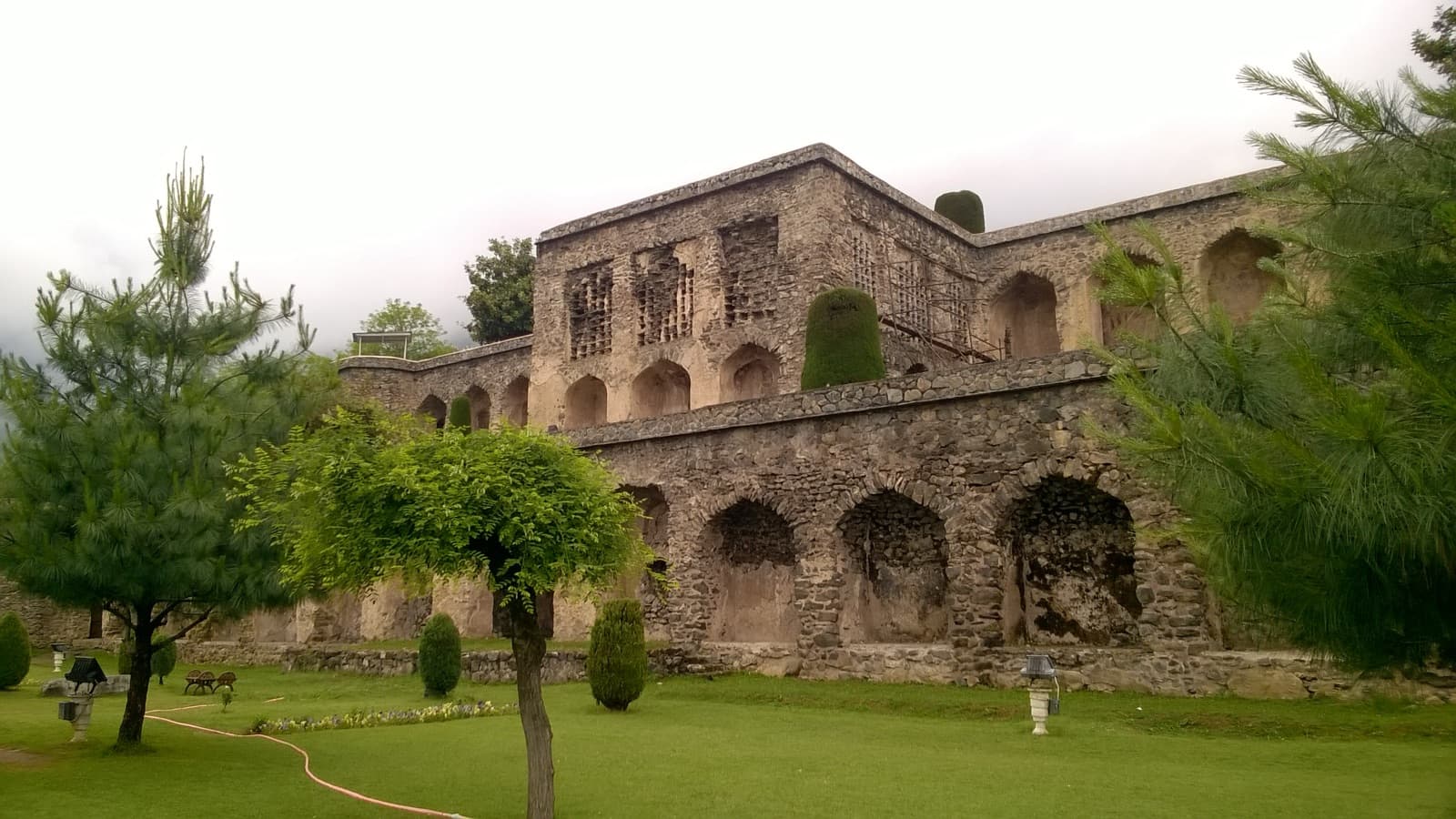
Pari Mahal
The Palace of Fairies • Ancient Astronomical Observatory
About Pari Mahal
Pari Mahal, meaning "Palace of Fairies," is a historic seven-terraced garden located on the Zabarwan mountain range overlooking Dal Lake in Srinagar, Jammu and Kashmir. Built in the 17th century by Dara Shikoh, the eldest son of Mughal Emperor Shah Jahan, it served as an astronomical observatory and a school of astrology.
The structure is built in the form of a series of terraced gardens, with each terrace connected by stone steps. Pari Mahal offers panoramic views of Dal Lake, the city of Srinagar, and the surrounding mountains. The location provides one of the best viewpoints in Kashmir for watching sunsets.
The architecture combines Islamic and Persian styles, and the terraced gardens were designed to study astronomy and astrology. Today, Pari Mahal is a popular tourist destination known for its historical significance, beautiful architecture, and stunning panoramic views of the Kashmir Valley.
Historical Background
17th Century - Construction
Built by Dara Shikoh, the eldest son of Mughal Emperor Shah Jahan, as an astronomical observatory and school of astrology.
Purpose
Served as a center for learning astronomy, astrology, and other sciences during the Mughal era.
Mughal Era
Used by scholars and astronomers to study celestial bodies and make astrological predictions.
British Period
The structure was preserved and maintained by the British administration.
Present Day
Maintained as a heritage site and popular tourist destination for its historical significance and panoramic views.
Architecture & Features
Structure Design
- • Seven terraced gardens
- • Stone steps connecting terraces
- • Islamic and Persian architecture
- • Arched doorways and windows
- • Ancient stone construction
Key Features
- • Panoramic views of Dal Lake
- • Views of Srinagar city
- • Mountain range backdrop
- • Best sunset viewpoint
- • Historical significance
Best Time to Visit
Early Morning
Clear views, pleasant weather, and fewer crowds for photography.
Daytime
Explore the terraces, learn about history, and enjoy the views.
Sunset (Best)
Most popular time to visit for stunning sunset views over Dal Lake.
Activities & Experiences
Exploration
- • Walk through seven terraces
- • Admire the architecture
- • Learn about astronomical history
- • Enjoy panoramic valley views
- • Photography of landscapes
Best Experiences
- • Watch sunset over Dal Lake
- • Panoramic city views
- • Mountain range photography
- • Historical exploration
- • Peaceful evening strolls
Essential Visiting Tips
What to Bring
- • Comfortable walking shoes
- • Camera for photography
- • Water bottle
- • Warm clothing (evenings are cold)
- • Binoculars (optional)
Important Notes
- • Best visited during sunset
- • Arrive early for good spots
- • Be careful on stone steps
- • Respect the historical site
- • Carry cash for entry fees
Photography Guide
Best Photo Spots
- • Top terrace: Panoramic views of Dal Lake
- • Sunset point: Golden hour over the valley
- • Archways: Architectural details and framing
- • City views: Srinagar from above
- • Mountain backdrop: Zabarwan range
Camera Settings
- • Aperture: f/8 to f/11 for landscapes
- • ISO: 100-400 for daylight
- • Shutter Speed: 1/125s or faster
- • Lens: Wide-angle (16-35mm) recommended
Nearby Attractions
Frequently Asked Questions
Pari Mahal translates from Persian as "Palace of Fairies" or "Abode of Angels." It was built by Dara Shikoh, the eldest son of Mughal Emperor Shah Jahan, in the mid-17th century. Dara Shikoh was a prince known for his intellectual and spiritual pursuits — he was a scholar of Sufism, Sanskrit, and Hindu philosophy. He converted a Buddhist monastery on the Zabarwan hillside into a garden-palace that served as an observatory and library for his studies. The terraced garden was designed by the prince's Sufi teacher Sheikh Mulla Shah.
The view from Pari Mahal is one of the finest in all of Srinagar. Perched at around 2,400 metres on the Zabarwan hillside, the six terraces of the garden overlook the entirety of Dal Lake, with the Hazratbal Shrine visible to the north, the Boulevard Road curving along the western shore, and the distant Pir Panjal mountains beyond. Srinagar city spreads across the valley below. At dusk, the entire valley lights up — Pari Mahal is one of the best spots in Srinagar to watch the sunset, and the site is illuminated at night, making it visible from across the valley.
Pari Mahal is located 10 km from Srinagar's Tourist Reception Centre on the slopes of the Zabarwan hill, above the Chashma Shahi spring garden. The approach road is narrow and steep for the final stretch. Taxis from Srinagar city take approximately 30–40 minutes. Auto-rickshaws are not suitable for the steep final section. Visitors can combine Pari Mahal with Chashma Shahi (immediately below it on the same hillside) in a single outing. The entry fee is ₹20 for Indian nationals and ₹250 for foreign tourists.
Yes. Pari Mahal is illuminated after dark and is a landmark visible across Srinagar's night skyline. The J&K Tourism Department opens the site for evening visits during the summer tourist season (May–September), typically until 8:00–9:00 PM. An evening visit is particularly worthwhile — as the sun sets over the Pir Panjal range and the lights of Srinagar begin to glow below, Pari Mahal takes on a deeply magical atmosphere. Check current evening opening hours with the Tourism Department as they can change seasonally.
Pari Mahal is laid out on six terraces cut into the Zabarwan hillside. Unlike the flat Mughal gardens of the valley floor, these terraces are narrow and steep, following the natural contour of the mountain. Water channels and small fountains originally ran through each level, fed by the natural spring above — most of this hydraulic system has been restored by the ASI. Chinar trees, rose bushes, and seasonal flowers are planted across the terraces. The uppermost terrace contains the ruins of the original library and observatory used by Dara Shikoh.
Chashma Shahi ("Royal Spring") is a small Mughal garden just below Pari Mahal on the same hillside. It was built by Shah Jahan in 1632 CE around a natural spring whose water is noted for its mineral properties. The spring still flows today and the water is considered sacred by many locals. Chashma Shahi and Pari Mahal are typically visited together on the same outing, with a taxi taking visitors up the hillside road past Chashma Shahi first, then continuing to Pari Mahal. Entry to Chashma Shahi is separate (₹24 for Indians, ₹200 for foreigners).
The terraces of Pari Mahal can be explored thoroughly in 30–45 minutes. Most visitors spend an additional 30 minutes simply sitting at the upper terrace and absorbing the view of Dal Lake and the valley below. If combining with Chashma Shahi (15 minutes away by road), allow 1.5–2 hours total. The road to Pari Mahal also passes through the University of Kashmir area and the Botanical Garden, both worth brief stops if you have time.
Dara Shikoh (1615–1659) is one of the most fascinating and tragically overlooked figures in Mughal history. A pluralist scholar and mystic, he translated the Upanishads from Sanskrit into Persian ("Sirr-e-Akbar"), wrote extensively on Sufism, and advocated for philosophical harmony between Hindu and Islamic thought. He was the favoured heir of Shah Jahan but was defeated and executed by his younger brother Aurangzeb in the Mughal succession war. Had Dara Shikoh become emperor, historians believe the trajectory of Mughal India might have been significantly different. Pari Mahal stands as one of the few physical legacies of this remarkable prince.
Location & Map
Pari Mahal is located on the Zabarwan mountain range overlooking Dal Lake in Srinagar, Jammu and Kashmir.
Address:
Pari Mahal, Zabarwan Range, Srinagar, Jammu and Kashmir 190001, India
Quick Facts
Entry Fees
Opening Hours
How to Reach
Srinagar Airport (SXR) - 18 km from Pari Mahal
Jammu Tawi Station - 300 km from Srinagar
Well connected by bus from major cities
Taxis, auto-rickshaws from Dal Lake or city center
Contact Information
Weather Guide
Browse every guide we have for this state: Places to visit in Jammu & Kashmir