Qutub Minar
Indo-Islamic Victory Tower & Historic Monument
About Qutub Minar
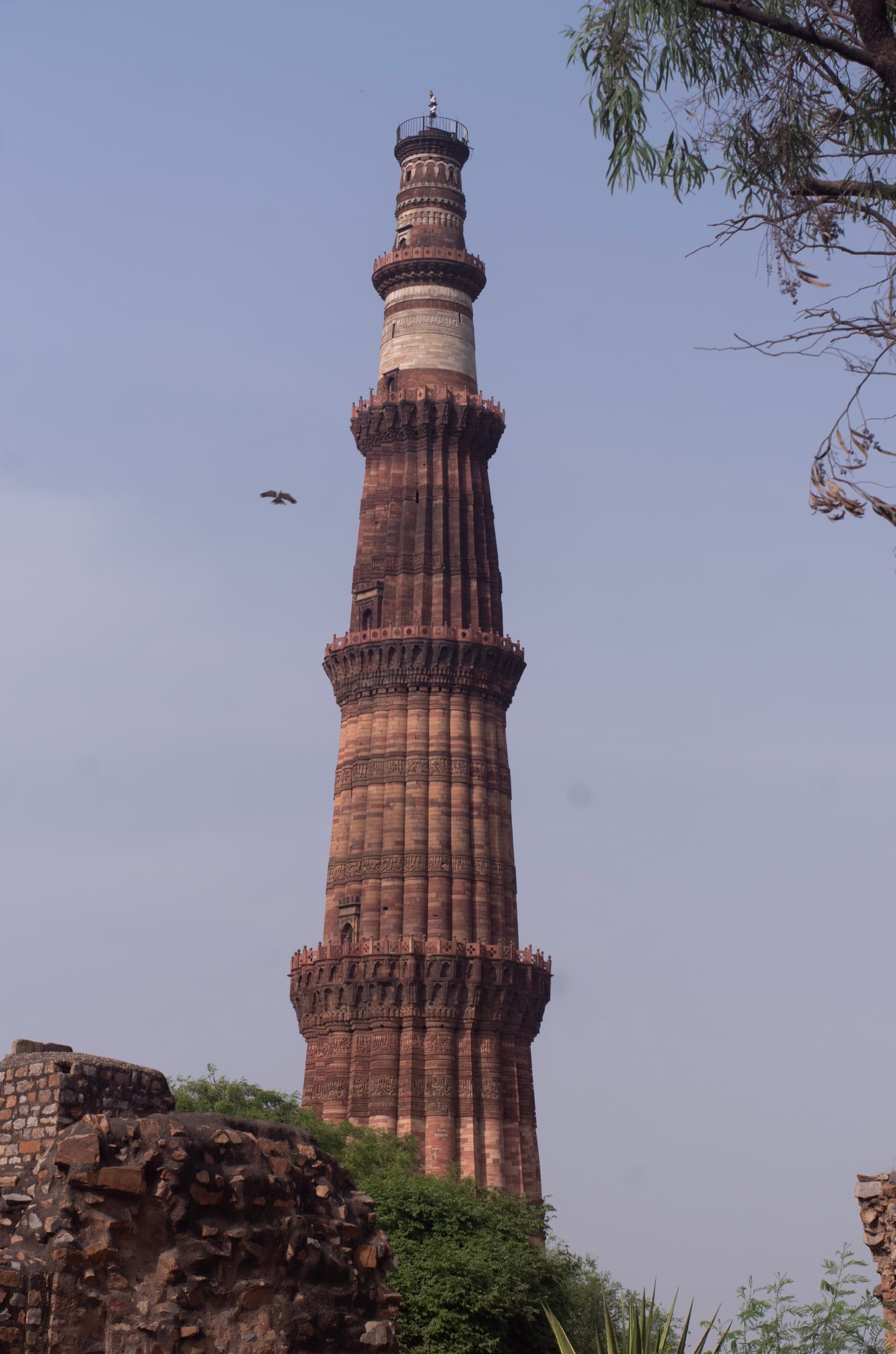
Qutub Minar is a magnificent 73-meter tall minaret and one of the tallest brick towers in the world. Located in the Mehrauli area of South Delhi, it is a UNESCO World Heritage Site and stands as a testament to Indo-Islamic architecture from the medieval period. The minaret is part of the Qutub Complex, which includes several historically significant monuments and structures.
Built initially by Qutub-ud-Din Aibak between 1192 and 1220, the minaret has been damaged and repaired multiple times over the centuries. Despite these changes, it remains one of India's most impressive architectural achievements and a symbol of Delhi's medieval heritage.
The minaret served multiple purposes in the medieval Islamic world—primarily as a tower from which the Adhan (call to prayer) was made. It also stands as a symbol of victory and power of the Delhi Sultanate during the 12th-13th centuries.
History & Background
Qutub Minar was constructed in the 12th century by Qutub-ud-Din Aibak, the founder of the Delhi Sultanate. The construction began after his victory against the Rajput kingdoms in 1192. The tower was completed by his successor, Iltutmish, who added the top three storeys.
The name "Qutub" comes from Qutub-ud-Din Aibak, meaning "axis" or "center" in Islamic tradition. The word "Minar" is Persian for minaret. Originally standing at 75 meters, the tower was damaged by earthquakes in 1505 and 1638, after which it was repaired and restored to its current height of 73 meters.
Throughout its history, several rulers have contributed to its upkeep. British restoration work in the 19th century, particularly under Lord Curzon's tenure as Viceroy, further stabilized the structure. Today, it remains one of India's most visited and photographed monuments.
Architecture & Design
The architectural design of Qutub Minar represents a masterpiece of Indo-Islamic architecture. The tower has five distinct storeys, each decreasing in diameter as it rises. The first three storeys are made of red sandstone, while the fourth storey is made of marble and sandstone, and the fifth storey is constructed entirely of marble.
The minaret features intricate marble and sandstone inlay work, with angular and circular fluting on alternating storeys. The inscriptions on the monument are in Arabic, Persian, and Nagari scripts, representing the multilingual and multicultural nature of medieval India. Jali work (latticed windows) on the upper storeys showcases the fine craftsmanship of the period.
The tower has a spiral staircase inside with 379 steps, which was historically used to reach the top, though it is now closed to the public for safety reasons. The architectural precision and structural engineering of this medieval tower continue to astonish modern engineers and architects.
Best Time to Visit
October to March is the ideal time to visit Qutub Minar. During these months, the weather is cool and pleasant, with temperatures ranging from 10°C to 25°C. The clear skies provide excellent lighting for photography and a comfortable experience for exploration.
Avoid: June to August brings intense heat and monsoon rains, making outdoor exploration challenging. April and May see scorching temperatures exceeding 40°C.
Pro Tips: Visit early morning (7-9 AM) for cooler temperatures, fewer crowds, and the best lighting for photography. Late afternoon visits (4-6 PM) also offer pleasant weather and beautiful sunset views. If interested in the light and sound show, visit in the evening.
Visiting Tips
- Plan 2-3 hours: To thoroughly explore the entire Qutub Complex, including nearby monuments
- Wear comfortable shoes: The ground is uneven with stones and dirt paths
- Bring water and sunscreen: Limited shade is available in the complex
- Carry a camera: The minaret and complex offer stunning photographic opportunities
- Hire a guide: A local guide can enrich your understanding of the historical and architectural significance
- Respect the site: It's a UNESCO World Heritage Site and holds religious significance for Muslims
Nearby Attractions
The Iron Pillar
An ancient 7-meter tall pillar made of iron, over 1,600 years old, with minimal rust—a marvel of ancient Indian metallurgy.
Quwwatul-Islam Mosque
One of the oldest mosques in India, featuring stunning Indo-Islamic architecture and intricate marble work.
Alai Darwaza
An impressive gateway built by Ala-ud-Din Khalji, showcasing Indo-Islamic architecture of the 14th century.
Mehrauli Archaeological Park
A sprawling archaeological park with numerous monuments from different periods of Delhi's history.
Frequently Asked Questions
Qutub Minar stands 73 meters (238 feet) tall, making it one of the tallest structures in India. When it was built in the 12th century, it was even taller before some damage was repaired over the centuries.
The name comes from Qutub-ud-Din Aibak, the founder of the Delhi Sultanate. Qutub is an Islamic title meaning "axis" or "center," and Minar is the Persian/Urdu word for minaret.
The best time to visit is October to March when the weather is cool and pleasant. Avoid visiting during June to August due to excessive heat and monsoon rains. Early morning (before 9 AM) offers cooler temperatures and fewer crowds.
Unfortunately, climbing the minaret is not permitted to tourists for safety reasons. You can only admire it from the ground level in the Qutub Complex. However, you can visit the nearby Iron Pillar and explore the surrounding monuments.
The Iron Pillar is a 7-meter tall pillar made of iron that was erected in the 4th century CE. Despite being over 1,600 years old, it shows minimal rust, which has puzzled metallurgists. It's a UNESCO World Heritage Site and testament to ancient Indian metallurgical expertise.
Plan for 2-3 hours to thoroughly explore the entire Qutub Complex. This includes time to view Qutub Minar, the Iron Pillar, Quwwatul-Islam Mosque, Ala-ud-Din Khalji's tomb and madrasa, and the surrounding ruins.
Yes, there is a light and sound show in Hindi and English held in the evenings (usually 6:30 PM and 7:30 PM depending on the season). It narrates the history and stories of the Qutub Complex with illuminated monuments.
Wear comfortable, breathable clothing, especially during summer. Apply sunscreen and wear a hat or cap. The complex involves walking on uneven surfaces, so wear closed-toe walking shoes. Modest clothing is recommended as it's a historic Islamic monument.
Location & Map
Quick Facts
Entry Fees
Light & Sound show: ₹100 (additional)
Opening Hours
Closed every Friday morning (prayer time)
Getting There
By Metro:
Blue Line - Qutub Minar Station (closest)
By Taxi/Uber:
15-20 km from City Center (₹200-400)
By Bus:
DTC buses 505, 506 from Nehru Place
Photography Tips
- • Golden hour (sunrise/sunset) offers best lighting
- • Wide-angle lens captures the full height
- • Early morning avoids shadows and crowds
- • Capture close-ups of intricate inlay work
- • The Iron Pillar makes great subject matter