Konark Sun Temple
Black Pagoda • The Chariot of the Sun God
About Konark Sun Temple
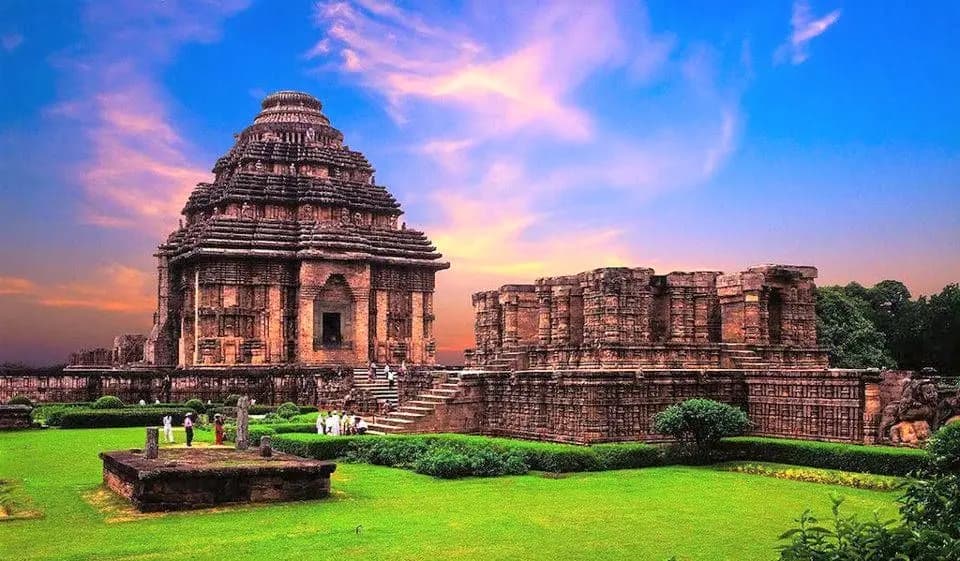
The Konark Sun Temple is a 13th-century Hindu temple dedicated to the Sun God, Surya. Located in Konark, Odisha, it is one of the most famous temples in India and a UNESCO World Heritage Site since 1984.
The temple is designed in the shape of a colossal chariot with 12 pairs of elaborately carved stone wheels, some of which are 3 meters wide, and is pulled by seven horses. The temple represents the chariot of Surya, the sun god, who rides across the heavens.
Built by King Narasimhadeva I of the Eastern Ganga Dynasty around 1250 CE, the temple is renowned for its intricate stone carvings, architectural grandeur, and astronomical significance. The temple's alignment allows the first rays of the sun to fall on the main entrance.
Historical Background
1250 CE - Construction Begins
King Narasimhadeva I commissions the temple construction.
1275 CE - Completion
The temple is completed after 25 years of construction.
15th Century - Decline
Temple begins to fall into disrepair and is abandoned.
1904 - British Restoration
Major restoration work begins under British supervision.
1984 - UNESCO Recognition
Declared a World Heritage Site for its outstanding value.
Architectural Marvel
Design Elements
- • Chariot-shaped temple with 12 wheels
- • Seven horses pulling the chariot
- • Intricate stone carvings and sculptures
- • Astronomical alignments
- • Kalinga style architecture
Dimensions
- • Height: 229 feet (70 meters)
- • Wheel diameter: 9-12 feet
- • Horses: 7 stone horses
- • Material: Khondalite stone
- • Orientation: East-facing
Best Time to Visit
Sunrise (6:00 AM)
Experience the magical sunrise alignment and fewer crowds.
Morning (9:00 AM - 12:00 PM)
Best lighting for photography and detailed exploration.
Sunset (5:00 PM)
Golden hour lighting and romantic atmosphere.
Essential Visiting Tips
What to Bring
- • Comfortable walking shoes
- • Camera with wide-angle lens
- • Water bottle and snacks
- • Hat and sunscreen
- • Light, modest clothing
Important Notes
- • Visit early morning for sunrise
- • Photography allowed throughout
- • Guided tours available
- • Respect religious customs
- • Combine with Puri visit
Astronomical Significance
The Konark Sun Temple is not just an architectural marvel but also an astronomical observatory. The temple's design incorporates sophisticated astronomical knowledge and solar alignments.
Solar Alignments
- • East-facing orientation for sunrise
- • First rays fall on main entrance
- • 12 wheels represent 12 months
- • 7 horses represent 7 days
Wheel Calculations
- • 8 spokes in each wheel
- • 24 spokes total = 24 hours
- • 12 wheels = 12 months
- • 7 horses = 7 days
Photography Guide
Best Photo Spots
- • Main Entrance: Sunrise alignment shots
- • Chariot Wheels: Detailed carvings and symmetry
- • Stone Horses: Majestic sculptures
- • Overall View: Full chariot structure
- • Interior Details: Wall carvings and motifs
Camera Settings
- • Aperture: f/8 to f/11 for sharp details
- • ISO: 100-400 for best quality
- • Shutter Speed: 1/125s or faster
- • Lens: Wide-angle (16-35mm) for full view
Nearby Attractions
Puri Jagannath Temple
One of the four sacred Char Dham temples, famous for the annual Rath Yatra.
Entry Fee: Free (Hindus only)
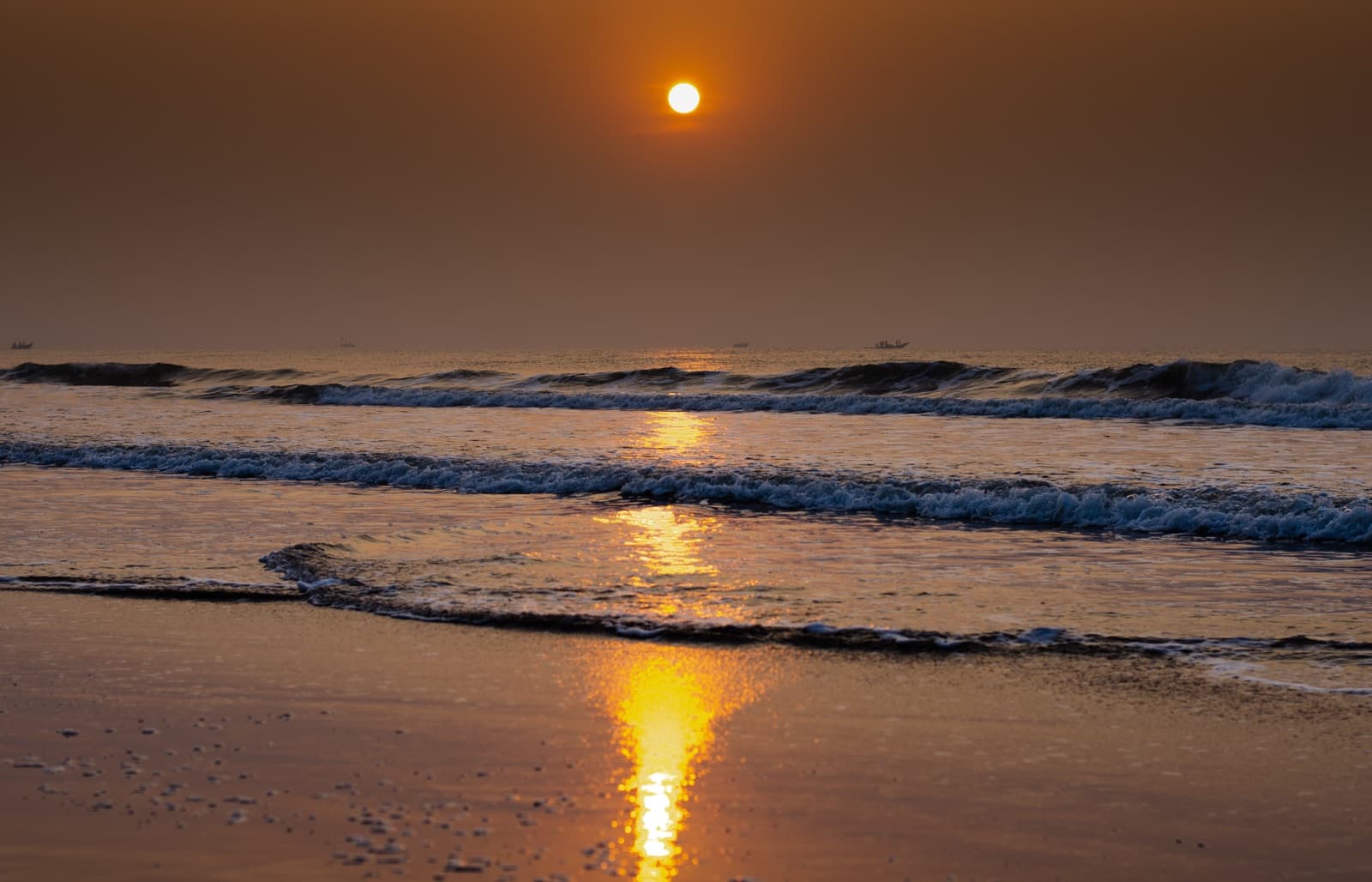
Chandrabhaga Beach
Beautiful beach known for its pristine waters and sunset views.
Best For: Beach activities and photography
Ramachandi Temple
Ancient temple dedicated to Goddess Ramachandi, located by the sea.
Entry Fee: Free
Kuruma Buddhist Site
Ancient Buddhist monastery with archaeological significance.
Entry Fee: Free
Frequently Asked Questions
The Konark Sun Temple was built by King Narasimhadeva I of the Eastern Ganga dynasty between 1238 and 1264 CE as an act of devotion to Surya, the Hindu sun god. According to legend, it was also built in gratitude for the recovery of the king's son from leprosy, believed to have been cured through the blessing of the sun god. The temple was designed to resemble the chariot of Surya — twelve pairs of elaborately carved stone wheels represent the twelve months of the year, and seven horses pulling the chariot symbolise the seven days of the week.
No. The Konark Sun Temple is no longer an active place of worship. The main sanctum (the towering shikhara) collapsed centuries ago — possibly in the 15th or 16th century — and the temple was abandoned and fell into disuse. The Archaeological Survey of India (ASI) manages the site as a protected monument. The main audience hall (Jagamohana) still stands and is one of the finest examples of Kalinga architecture in existence. The site is maintained purely as a heritage and archaeological monument.
The 24 intricately carved stone wheels at Konark are among the most celebrated sculptural elements in Indian architecture. Each wheel is approximately 3 metres in diameter and carved with extraordinary detail — the spokes function as sundials, and by measuring the shadow cast, one can determine the time of day with remarkable accuracy. The 12 pairs of wheels also represent the 12 months of the Hindu solar calendar, and the 8 spokes on each wheel symbolise the 8 praharas (3-hour divisions) of a day. The wheels have become iconic representations of Indian heritage and are referenced in the national flag's design.
The Konark Dance Festival is an annual classical dance festival held at the open-air auditorium of the Konark Sun Temple complex, typically in the first week of December. Major Indian classical dance forms — Odissi, Bharatanatyam, Kuchipudi, Kathak, Manipuri, and others — are performed against the backdrop of the illuminated temple, creating one of India's most spectacular cultural events. The festival runs over five evenings and is attended by thousands of visitors. Tickets should be booked in advance through the Odisha Tourism Development Corporation.
Konark is 65 km from Bhubaneswar (approximately 1.5 hours by road) and 35 km from Puri (approximately 45 minutes by road). The Puri–Konark Marine Drive, which runs along the Bay of Bengal coast, is a particularly scenic route and is highly recommended for the journey between these two destinations. Regular bus services run between Puri and Konark. Most visitors to Konark combine it with Puri (Jagannath Temple) and occasionally Bhubaneswar on a "Golden Triangle of Odisha" itinerary.
Photography is freely permitted throughout the outer premises and grounds of the Konark Sun Temple complex. Tripods, however, require prior permission from the site's ASI office. The interior of the Jagamohana (main audience hall) has some lighting restrictions — flash photography may affect the preserved stone carvings. Drone photography is not permitted without a separate permit from the DGCA and ASI. The erotic sculptural panels on the outer walls are one of the most photographed elements of the temple and are fully accessible to visitors.
October to March is the ideal time to visit Konark, when the coastal Odisha climate is mild (20°C–28°C) and humidity is lower. April through June is extremely hot and humid (temperatures can reach 38°C), and while the temple can still be visited early in the morning, afternoon visits are uncomfortable. The monsoon (July–September) brings heavy rainfall to the Odisha coast, with occasional cyclone warnings that can disrupt travel. The pre-dawn and early morning hours are particularly magical at Konark, when the first light hits the eastern face of the Jagamohana — an experience well worth an overnight stay in nearby Puri.
European sailors and traders historically called the Konark Sun Temple the "Black Pagoda" to distinguish it from the whitewashed Jagannath Temple in Puri (which they called the "White Pagoda"). The name may also derive from the dark colour of the laterite and chlorite schist used in parts of the temple's construction, or from the weathered appearance of the temple after centuries of sea spray and coastal humidity. The European name stuck in navigational charts for centuries, and sailors used the temple's distinctive silhouette as a landmark for approaching the Odisha coast.
Location & Map
The Konark Sun Temple is located in Konark, a small town in the Puri district of Odisha.
Address:
Konark, Puri District, Odisha 752111, India
Coordinates:
19.8876° N, 86.0943° E
Quick Facts
Entry Fees
Opening Hours
How to Reach
Bhubaneswar Airport (BBI) - 65 km from Konark
Puri Railway Station - 35 km from Konark
Well connected by bus from Bhubaneswar and Puri
Auto-rickshaws and taxis available
Contact Information
Weather Guide
Local Cuisine
Pakhala
Traditional Odia rice dish
Chungdi Malai
Creamy prawn curry
Dalma
Mixed vegetable dal
Shopping Guide
Pattachitra
Traditional cloth paintings
Silver Filigree
Intricate silver jewelry
Palm Leaf Crafts
Traditional handicrafts
Browse every guide we have for this state: Places to visit in Odisha